
If changing a field on a form means raising a request with the supplier, the platform is not yours. In fact, it belongs to the supplier, and it is far from a fully configurable platform.
Moreover, processes change: a new client arrives with its own requirements, a standard is revised, a unit starts up in another country. Whenever every adjustment depends on development, teams wait for weeks, create parallel workarounds and control becomes scattered.
Operational gains of a fully configurable platform
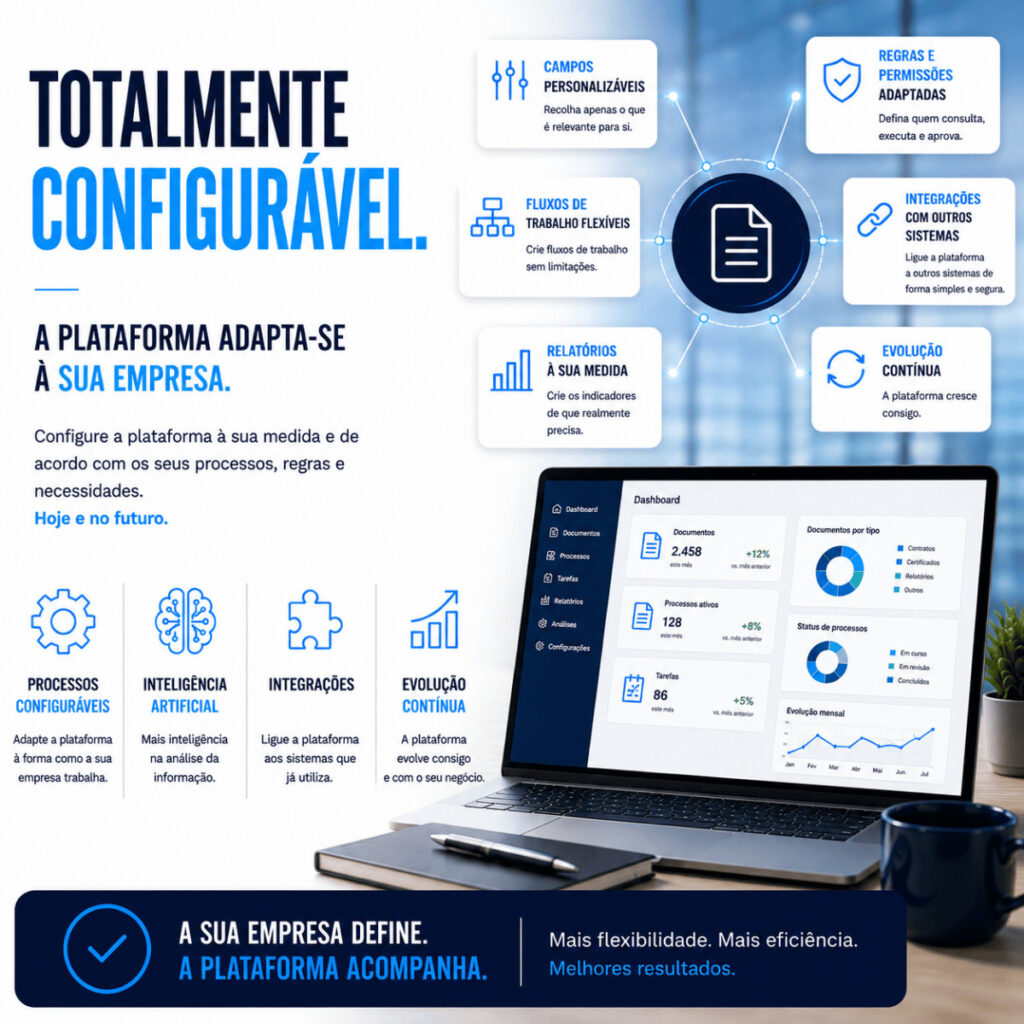
That is why a fully configurable platform reverses this logic. Your organisation decides; the platform follows:
- Customisable fields: collect only what is genuinely relevant to you.
- Tailored rules and permissions: define who views, who carries out and who approves.
- Flexible workflows: create stages and validations without technical limitations.
- Integrations with other systems: connect the platform to what you already use, simply and securely.
- Tailor-made reports: indicators designed above all for the decisions you actually make.
- Continuous evolution: the platform grows with the business and, as a result, removes the need for reimplementations.
On the Glartek platform, therefore, configuring does not require programming. The administration team sets up fields, statuses, rules, forms and workflows, with support from AISP during the design phase, so that flexibility never turns into disorganisation.
Your company decides. The platform follows.
Request a demo and watch, live, one of your company’s workflows being configured without a single line of code.
Further reading: How to choose a document management platform.
Read also: A platform should not force a company to change the way it works and The more configurable the HSE platform, the stronger the governance must be. Finally, find out more about configurability and no-code.