
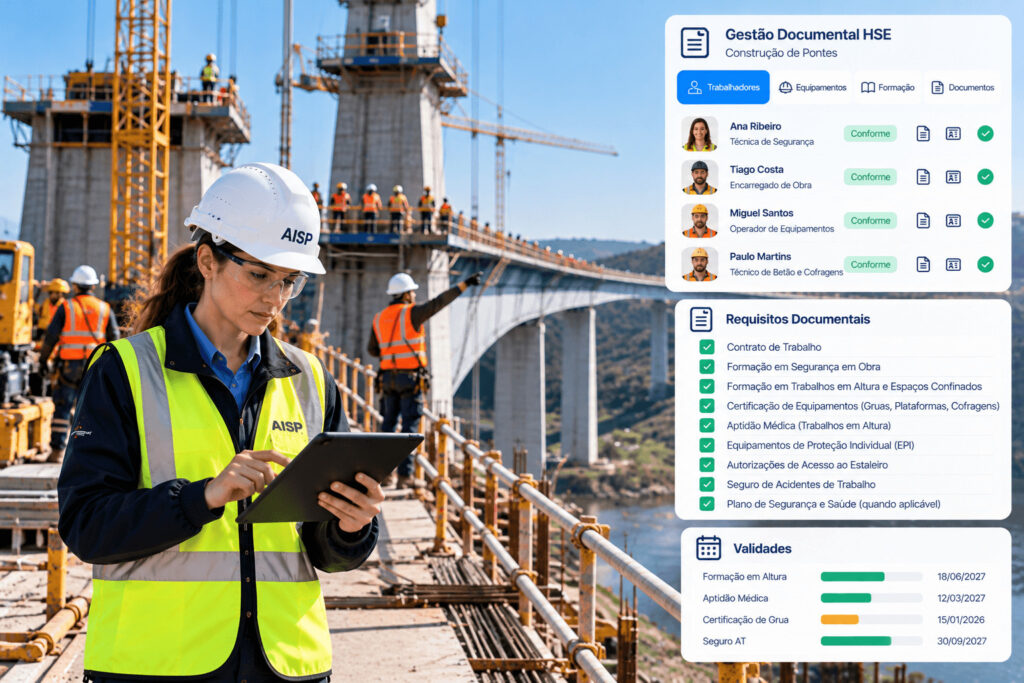
Occupational health and safety are fundamental in any construction project, where the risk of accidents is constant. Coordinating these aspects effectively is essential to ensure that site operations run safely and in compliance with regulations. However, traditional construction site document management can be complex and error-prone, especially when information is scattered across various physical and digital media. This is where document management platforms emerge as a decisive solution. These platforms not only centralise all relevant documentation but also automate critical processes, improving transparency, communication and compliance at every stage of the project. In this article, we explore how document management platforms are transforming health and safety coordination on site, offering a significant step forward in efficiency and safety.
Centralisation and accessibility in construction site document management
One of the greatest advantages of document management platforms is the ability to centralise all documentation in a single accessible location. In construction projects, health and safety documentation is extensive and includes safety plans, training records and inspection reports, among others. Keeping this documentation in different physical locations or across multiple digital systems can lead to delays and critical errors. By contrast, a document management platform stores all documents securely. As a result, any authorised person can access them quickly, from any location and device. This not only improves efficiency but also ensures that everyone involved has access to the latest and most relevant information.
Process and workflow automation
Process automation is another crucial feature that document management platforms offer. In health and safety coordination on site, several processes demand rigour. Examples include approving safety plans, communicating risks and updating inspection records. Automating these processes reduces the administrative burden and minimises the risk of human error. In addition, it ensures that every step is completed within the set deadlines. For example, a platform can send automatic notifications to remind those responsible that an inspection deadline is approaching. Likewise, it can warn when a new report needs to be submitted. At the same time, the platform logs the history of every action taken, providing a clear and transparent audit trail.
Regulatory compliance and construction site document management
Compliance with health and safety regulations is one of the most critical challenges in any construction project. Non-compliance can result in fines, site stoppages or, worse still, serious accidents. For this reason, document management platforms help to ensure compliance on site. To do so, they provide tools for continuously monitoring activities and managing documents in line with legal requirements. For example, the platform can be set up to alert users automatically when a mandatory document needs renewing or when new rules come into force. Furthermore, the ability to generate detailed reports on health and safety activities can be vital during audits and inspections.
Effective communication and collaboration
On any site, communication between the different teams and stakeholders is essential. Only then can all health and safety issues be properly addressed. Document management platforms make this communication on site easier. For example, they allow document sharing, real-time comments and automatic notifications to everyone involved. Thus, any update to a safety plan reaches all team members immediately, wherever they are. Consequently, collaboration between teams becomes more effective, ensuring that everyone is aligned and informed about safety procedures.
Risk monitoring and management
Proactive risk management is an essential part of health and safety coordination on site. Document management platforms make it possible to monitor risks in real time, recording incidents and near misses and analysing trends that may point to areas of concern. Detailed reports and dashboards enable safety managers to make informed decisions and adjust safety plans as needed. On the other hand, these platforms can integrate with other tools, such as construction management systems or BIM (Building Information Modeling) software. This integration provides a broader and more detailed view of the risks associated with each phase of the project.
Ongoing training and awareness
Worker training is one of the pillars of site safety. However, ensuring that all employees receive the right training and that it is properly recorded can be a challenge. Document management platforms make this process easier by storing all training records in one place. They also allow alerts to be set for new training or refresher sessions. Some platforms can even integrate e-learning modules, so that workers can complete training online while the platform automatically records their progress. In this way, training always stays up to date and every employee is properly prepared to comply with safety standards.
The legal framework for safety coordination
In Portugal, Decree-Law No. 273/2003 regulates health and safety conditions on temporary or mobile construction sites. This law provides for several essential documents: the health and safety plan, the site’s technical file and, for certain works, prior notice to the Working Conditions Authority (ACT). In addition, it defines the role of the safety coordinators for the design and construction stages, who are appointed by the project owner.
During construction, the site safety coordinator must check that the plan is applied, coordinate the activities of the various companies and monitor site access for subcontractors and self-employed workers. As a result, the number of documents to control is huge, and this is where a document management platform makes the difference.
Key documents in safety coordination
| Document | Main responsibility |
|---|---|
| Health and safety plan at design stage | Project owner, through the design stage coordinator |
| Plan developed for the construction stage | Main contractor |
| Prior notice | Project owner, where legally required |
| Safety procedure sheets | Main contractor and subcontractors |
| Technical file | Project owner, with support from the coordinators |
Practical example: A new subcontractor joins the site
Imagine that, halfway through the works, a waterproofing subcontractor joins the site. Previously, the coordinator received the documents by email, checked them by hand and updated a shared spreadsheet.
With the platform, the subcontractor receives an invitation, uploads the required documents and lists its workers and equipment. Next, the coordinator validates the documents and approves the safety procedure sheets. Finally, the platform authorises site access and records everything in the site history. As a result, the process takes less time and is fully documented for the technical file.
Checklist for the safety coordinator
- Up-to-date, accessible health and safety plan.
- List of authorised companies and workers.
- Each subcontractor’s documents validated before site access.
- Procedure sheets approved for work involving special risks.
- Record of visits and non-conformities.
- Documentation gathered for the technical file.
Common mistakes to avoid
A frequent mistake is to treat the health and safety plan as a static document that does not keep pace with the works. Another mistake is to allow subcontractors on site before validating their documentation. It is also common to prepare the technical file only at the end, when it is already difficult to gather all the necessary information.
Frequently asked questions
Does the platform replace the health and safety plan?
No. The plan remains mandatory, but the platform helps to manage it, keep it up to date and make sure it reaches everyone involved.
Who should have access to the platform on a site?
The project owner, the safety coordinators, the main contractor and the subcontractors, each with permissions suited to their role. That way, everyone works from the same information without exposing unnecessary data.
Conclusion: The future of construction site document management
Document management platforms are revolutionising the way construction companies manage health and safety on site. By centralising documentation, automating processes, ensuring regulatory compliance and improving communication and collaboration, these platforms enable more effective and safer project management. Indeed, the impact of these solutions is clear in lower risks and greater efficiency. At the same time, they ensure that everyone involved has access to the right information at the right time. For companies that want to stay competitive and keep their workers safe, investing in a document management platform is not just a strategic advantage but also an operational necessity. In short, the future of health and safety on site lies in these technologies, which continue to evolve and offer new features to meet the growing demands of the sector.
Read also: Site inspections with document management platforms and Site audits with document management platforms.
For more information on occupational safety and health, see the European Agency for Safety and Health at Work (EU-OSHA).