
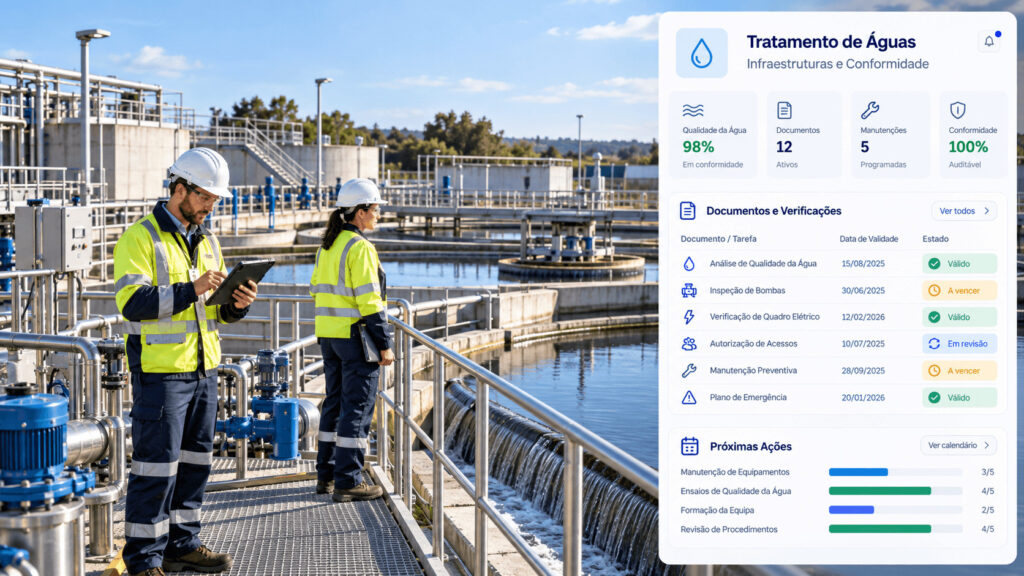
Document management platforms play a fundamental role in the operation of any organisation, with a direct impact on the efficiency, security and accessibility of information. However, beyond the traditional operational benefits, document management is increasingly recognised for its environmental and economic benefits and for its contribution to sustainability.
Moving from paper to digital not only improves internal processes but also offers significant ecological and financial advantages. Lower consumption of paper and ink, and less energy spent on physical storage, are just some of the tangible environmental benefits. In addition, adopting sustainable practices in document management can lead to substantial cost savings, from lower spending on materials to better use of physical space and higher productivity.
Environmental and economic benefits of document management
In this article, we explore how document management can be an important ally in promoting sustainability. We look at the main environmental benefits, such as a smaller carbon footprint and the conservation of natural resources, as well as the economic advantages, including lower operating costs and greater efficiency. By adopting sustainable document management strategies, organisations not only help to protect the environment but also strengthen their competitive position in the market.
Reducing paper use
One of the most immediate environmental benefits of digital document management is reduced paper use. Indeed, digitising documents removes the need for printing and physical storage, significantly reducing the consumption of paper and associated materials such as ink and toner. In this way, it not only helps to reduce deforestation and waste but also lowers operating costs.
Saving energy and resources
Eliminating physical archives and adopting digital storage reduces the need for physical space and the energy used to maintain it. Thus, less paper means less need for transport and for storage in climate-controlled facilities, resulting in significant savings in energy and resources. Moreover, the modern data centres that store digital documents increasingly adopt energy efficiency practices and renewable energy sources.
Less waste
Digitising documents helps to reduce solid waste. For example, eliminating paper documents cuts the amount of rubbish generated and the need for secure shredding of confidential documents. It also eases the burden on waste management systems and contributes to a cleaner environment.
Sustainability and corporate responsibility
Adopting sustainable practices in document management helps companies to meet their corporate responsibility and sustainability targets. Furthermore, demonstrating a commitment to reducing environmental impact can enhance the company’s reputation with clients, investors and partners, and help to meet environmental legal requirements.
Economic benefits
Beyond the environmental benefits, digital document management offers substantial economic advantages. On the one hand, lower paper consumption, energy savings and the removal of physical storage costs lead to significant operational savings. On the other hand, process automation and improved operational efficiency help to reduce costs and increase productivity.
Environmental compliance
Document management makes it easier to comply with environmental laws and regulations. For instance, traceability and automated reporting help companies to monitor and document their sustainable practices, proving compliance with environmental standards. As a result, the risk of fines and penalties linked to non-compliance is reduced.
Mobility and remote working
Digitising documents allows employees to access information from anywhere, promoting mobility and remote working. Consequently, it reduces the need for daily commuting and, with it, the greenhouse gas emissions associated with transport. It also supports business continuity in crisis situations, such as natural disasters or pandemics.
The environmental impact of digital also counts
Digitalisation reduces paper consumption, but it is not environmentally neutral. Data centres consume energy and water, and IT equipment has a footprint linked to its manufacture and end of life. For this reason, a sustainable strategy should also consider digital sobriety.
In practice, this means keeping only the documents you need, applying retention periods and removing duplicates. It is also advisable to choose providers that use efficient data centres and renewable energy. Likewise, extending the useful life of equipment and sending it for proper recycling reduces the impact of hardware.
Sustainability and non-financial reporting
Many companies have to report environmental, social and governance indicators. The Corporate Sustainability Reporting Directive (CSRD), whose scope was revised by the European Union in 2025, requires reliable and verifiable information. Even companies that are not directly covered are receiving more and more data requests from their clients. A document management platform therefore helps to gather the necessary evidence, such as certificates, environmental permits and waste records, in an organised and traceable way.
Practical example: The end of paper site folders
Imagine a construction company that kept paper files on every site with its subcontractors’ safety documentation. Each site printed thousands of pages a year, and the folders were then transported and archived for years.
With the document management platform, subcontractors upload their documents in digital format. Validation and consultation then take place on a computer or tablet. As a result, the company significantly reduces its paper and toner consumption, frees up archive space and can find any document in seconds.
Measurable economic benefits
The economic gains of digital document management go beyond paper. First, less time is spent searching for, copying and sending documents. Second, archive space is freed up and can be used for other purposes or no longer rented. In addition, fewer trips to deliver or collect documents reduce transport costs and emissions. Finally, a lower risk of losing important documents avoids the costs of rebuilding files, fines or delays.
To communicate these benefits credibly, it is advisable to measure the starting point and track progress with simple indicators. That way, the company can demonstrate concrete results in sustainability reports, funding applications or supplier qualification processes.
Checklist for more sustainable document management
- Digitise processes, not just documents.
- Set retention periods and delete what is no longer needed.
- Avoid duplicates and unnecessary versions.
- Choose providers with efficient data centres.
- Set printing to double-sided by default.
- Send equipment and paper for certified recycling.
- Measure and communicate the results achieved.
Common mistakes to avoid
A frequent mistake is to digitise documents and keep printing them to sign or consult them. Another mistake is to keep everything indefinitely, increasing storage needlessly. Some companies also publish savings figures without measuring them, which undermines the credibility of their environmental communication.
Frequently asked questions
How can you measure the reduction in paper consumption?
By comparing the number of reams purchased and pages printed before and after implementation. Printer counters are a simple and reliable source, allowing you to track progress month by month and by department.
Does electronic signature help to reduce paper?
Yes. It allows approval processes to be completed without printing, scanning and sending documents, which removes one of the main reasons for printing.
Is digitalisation always more sustainable than paper?
For most administrative processes, yes, especially when it eliminates printing, travel and physical archiving. Even so, it is important to avoid excessive storage and to choose energy-efficient providers.
Which documents no longer need to exist on paper?
The vast majority of administrative documents, such as contracts, declarations, certificates and training records, can be managed exclusively in digital format, especially when they are signed electronically. Exceptionally, some documents may have to be kept on paper due to legal or contractual requirements.
Conclusion: Environmental and economic benefits
Document management platforms offer a valuable combination of environmental and economic benefits. By reducing paper use, saving energy and resources, cutting waste and facilitating environmental compliance, companies can make a significant contribution to sustainability. At the same time, the economic advantages of lower operating costs and greater efficiency make digital document management a strategic choice for companies seeking sustainable growth.
Adopting document management platforms is not just a smart business decision but also a commitment to protecting the environment. In short, companies that adopt these technologies are better placed to thrive in a sustainable and responsible future.
Read also: The contribution of document management platforms to sustainability and Cost reduction and productivity with document management platforms.
For official information on environmental policy in Portugal, see the Portuguese Environment Agency (APA).