
An “approved” stamp is only worth something if you can explain, at any time, why it was given. Approved documentation needs that evidence.
However, in many organisations, approving means opening an attachment, glancing at the date and replying to an email. As a result, months later, during an audit or after an incident, nobody can show what was checked, by whom and against which requirement.
How to manage approved documentation in a structured way
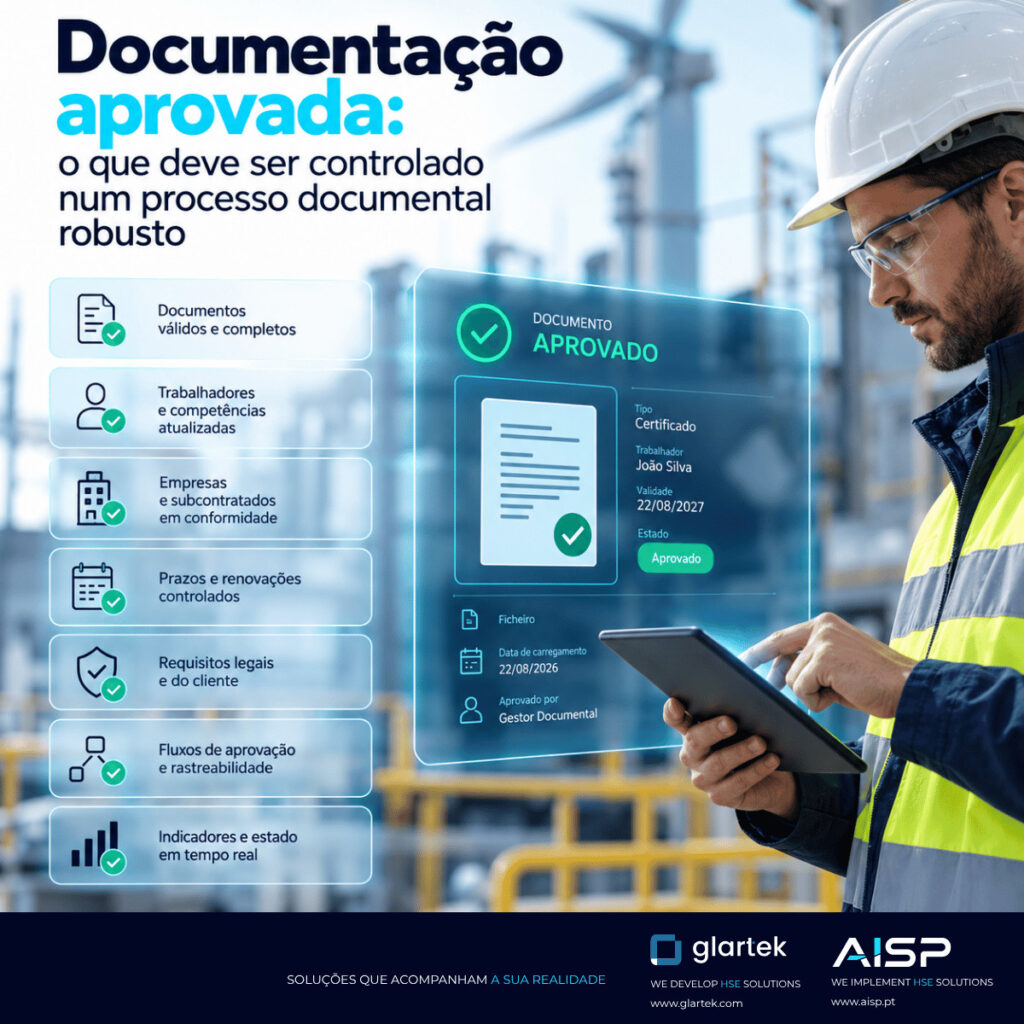
That is why a robust document process systematically controls seven dimensions:
- Valid and complete documents: content checked, not just the presence of the file.
- Up-to-date workers and competences: each person linked to the qualifications their role requires.
- Compliant companies and subcontractors: the whole chain, not just the first tier.
- Controlled deadlines and renewals: automatic alerts before anything expires.
- Legal and client requirements: the rules that apply to each context, configured on the platform.
- Approval workflows and traceability: who validated, when and with what evidence.
- Real-time indicators and status: the situation of every company and worker visible without searching.
Whenever these dimensions are connected on the same platform, approval stops being an isolated act. Instead, it becomes a documented decision you can defend before the client, the auditor or the labour inspectorate.
After all, approving is deciding. And every decision should therefore leave a trail.
Book a demo and see a complete approval cycle, from the submitted document to the audit record.
Further reading: Document management: A complete guide for companies.
Read also: The importance of traceability in contractor approval processes and Documentation as an operational condition. Finally, learn more about document compliance. For reference guidance, visit the ACT website (Portuguese labour inspectorate).