
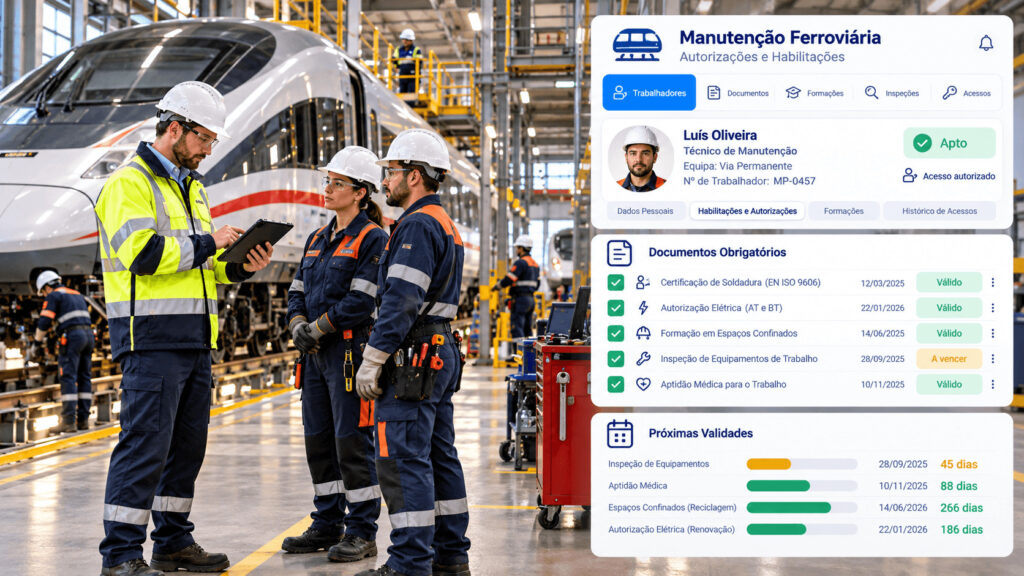
Implementing document management platforms requires meticulous coordination, and the role of teamwork is central to it, because success depends on cohesive and effective teams. Companies that invest in digitalising document management benefit from more agile processes, greater control over information and stronger security. However, the success of this digital transformation depends on the involvement of multiple departments and collaboration between specialised professionals. From choosing the right platform to integrating it with existing systems and training end users, every stage requires the active participation of the teams.
Teamwork allows a more robust approach to implementation, because it involves professionals from different areas, such as information technology (IT), cybersecurity, data management and even human resources. Each of these areas brings a unique and essential perspective. As a result, the platform not only meets the organisation’s technical needs, but also offers a smooth and effective user experience. Throughout this article, we look at how collaboration and synergy between teams are fundamental to the successful implementation of document management platforms.
The role of teamwork in implementation
Collaborative planning
The first step towards a successful document management platform implementation is careful planning. At this stage, the involvement of different teams is crucial. Technical teams need to assess the organisation’s needs, identify the required features and ensure that the platform is compatible with the existing infrastructure. At the same time, management teams are responsible for ensuring that business processes are aligned with the new solution. In this way, they ensure a transition without disruption to operations.
By bringing together professionals from different areas, it is possible to create a more complete and efficient implementation roadmap. In this way, the team identifies and mitigates risks, considers the needs of each department and ensures that all employees understand their role in the process. The result is a more strategic approach that is less prone to failures or delays.
Technical integration and collaboration with IT
The IT team plays a central role in implementing any document management platform. However, collaboration between IT and other teams is equally important to ensure successful technological integration. For example, it is essential for cybersecurity teams to take part from the outset. They can thus ensure that the platform meets security requirements, both in terms of data protection and compliance with regulations such as the GDPR (General Data Protection Regulation).
Collaboration between IT and cybersecurity is vital to ensure that every layer of the implemented solution is protected against cyber threats. In turn, joint work with data management teams ensures compliance with information archiving and retrieval policies, as well as a continuous and secure data flow between systems. This alignment between technical departments is fundamental to the platform’s long-term success.
User training and engagement
Implementing a document management platform is not complete without user training. The transition from manual to digital processes can be challenging for many employees. This is especially true in organisations whose workforce has varied levels of digital skills. At this point, human resources and internal training teams come into play. They work closely with those responsible for the platform to develop suitable training programmes.
Resistance to change is one of the main obstacles to implementing new technologies. However, with a teamwork approach in which all employees feel included in the process and have access to proper support, it is possible to reduce this resistance and speed up adoption of the new solution. Likewise, implementations that rely on an intuitive interface and involve end users from the start tend to have a higher success rate.
The importance of communication between teams
Effective communication between all the teams involved in the implementation is one of the keys to success. As well as ensuring that everyone is aligned with the project objectives, clear and open communication prevents misunderstandings and duplicated effort. In fact, document management platforms themselves can serve as a tool to facilitate communication and the sharing of relevant documents between teams.
By using features such as automated workflows, document comments and real-time alerts, employees can keep up to date on the project’s progress and quickly resolve any issues that arise. This smooth collaboration therefore helps the implementation run without problems and meet the expectations of everyone involved.
Who should be on the project team
A successful implementation depends on bringing the right people together from the start. The following table shows a typical composition:
| Role | Main contribution |
|---|---|
| Executive sponsor | Sets priorities, approves decisions and removes obstacles |
| Project manager | Plans, coordinates the teams and monitors deadlines |
| Occupational health and safety | Defines document requirements and validation criteria |
| IT and cybersecurity | Integrations, access and data protection |
| Procurement and contracting | Link to contracts and suppliers |
| Key users | Test the platform and help colleagues adopt it |
In this way, each area contributes its knowledge and feels responsible for the outcome.
A simple working rhythm
Collaboration needs clear routines. For example, many project teams hold a short weekly meeting to review progress, risks and pending decisions. In addition, a shared dashboard with tasks and owners avoids endless email exchanges. Finally, a monthly meeting with senior management ensures that important decisions are not left on hold.
Practical example: The role of key users
Imagine a company implementing a document management platform on five sites at the same time. Instead of training all users at once, it chooses one key user on each site. These employees take part in testing, receive in-depth training and become their colleagues’ first point of support.
As a result, questions are resolved more quickly and the central team receives concrete suggestions for improvement. At the same time, resistance to change decreases, because the platform is presented by colleagues who understand the reality of each site.
Common mistakes in collaboration between teams
The most frequent mistake is to leave the implementation solely to IT. Another mistake is to involve users only at the end, when the configuration can no longer be adjusted. It is also common not to define who decides in the event of disagreement, which delays the project.
Implementation success indicators
To know whether collaboration is delivering results, the project team should track a few indicators from the start, for example the percentage of users trained, the platform usage rate in the first weeks, the number of support requests and adherence to planned dates. In addition, a short user survey at the end of each phase helps to understand what went well and what should be improved. In this way, the team adjusts the plan in time and demonstrates the results achieved to senior management.
Frequently asked questions
How many people should the project team have?
A core team of four to six people is usually enough. Other areas can be involved when necessary.
How can teams be kept motivated during the project?
With clear objectives, regular progress updates and recognition of each area’s contribution. Showing quick wins also helps maintain engagement.
What should be done when two teams disagree?
The project manager should bring the parties together, clarify the objectives and, if necessary, escalate the decision to the executive sponsor. In this way, the disagreement is resolved quickly and the project does not stall.
Conclusion on the role of teamwork
The role of teamwork in implementing document management platforms is undeniable. From planning to training and post-implementation follow-up, each phase depends on the collaboration of multiple teams. Each one has its own responsibilities and expertise. For this reason, a collaborative approach ensures that the platform is implemented correctly and allows it to be optimised to meet the organisation’s long-term needs.
Knowledge sharing, open communication and the involvement of all stakeholders are fundamental to ensuring that the implemented system supports the organisation’s strategic objectives and offers a robust and secure document management solution. Ultimately, it is teamwork that turns the implementation of a document management platform into a real success.
Read also: Why ongoing technical support is as important as the initial implementation and Customer feedback during and after the implementation of document management platforms.
For more information on personal data protection, visit the Portuguese Data Protection Authority (CNPD).