
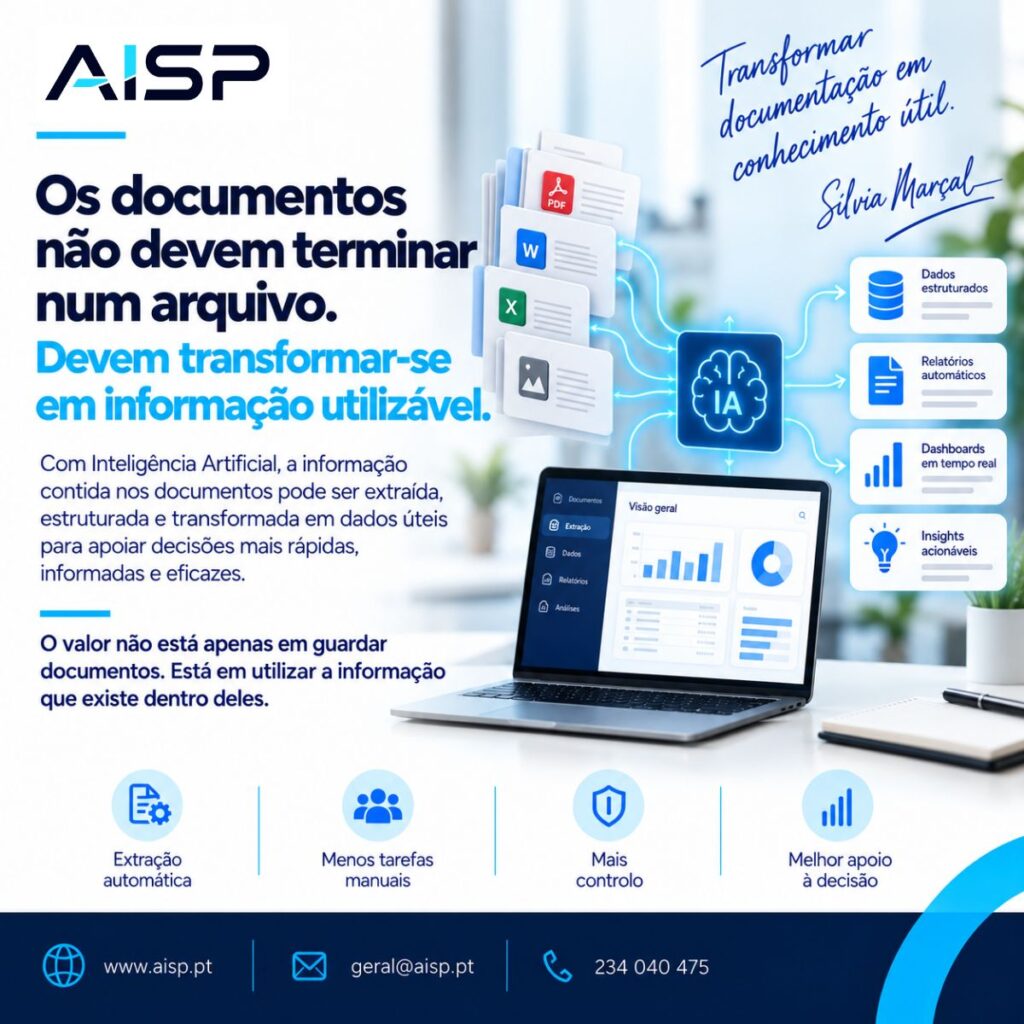
For a long time, the main role of document management was to store, organise and provide access to documents, while document data remained unexplored.
However, that is no longer enough today.
In fact, documents contain information that is critical to operations: dates, requirements, entities, amounts, statuses, evidence, references and many other data points that can support control, analysis and decision-making.
Therefore, with artificial intelligence, you can extract and structure that information and turn it into useful document data for the organisation.
In practice, this means:
- Less manual data entry
- Fewer transcription errors
- Structured, reusable information
- Data available for reports and indicators
- Faster access to relevant information
- Greater control and traceability
- Better decision support
For example, this capability is particularly important for HSE teams, because much of their operational information still arrives through certificates, reports, technical data sheets, records and other documents.
So the value does not lie only in storing documents. In fact, it lies in using the document data inside them.
Finally, it is this shift that turns document management into a more active, smarter and more useful tool for the organisation.
See also: From document to dashboard: Turning document information into indicators and AI built into daily work, not added as an isolated feature.
In addition, when documents contain personal data, it is important to follow the data protection guidance of the CNPD, the Portuguese Data Protection Authority.