
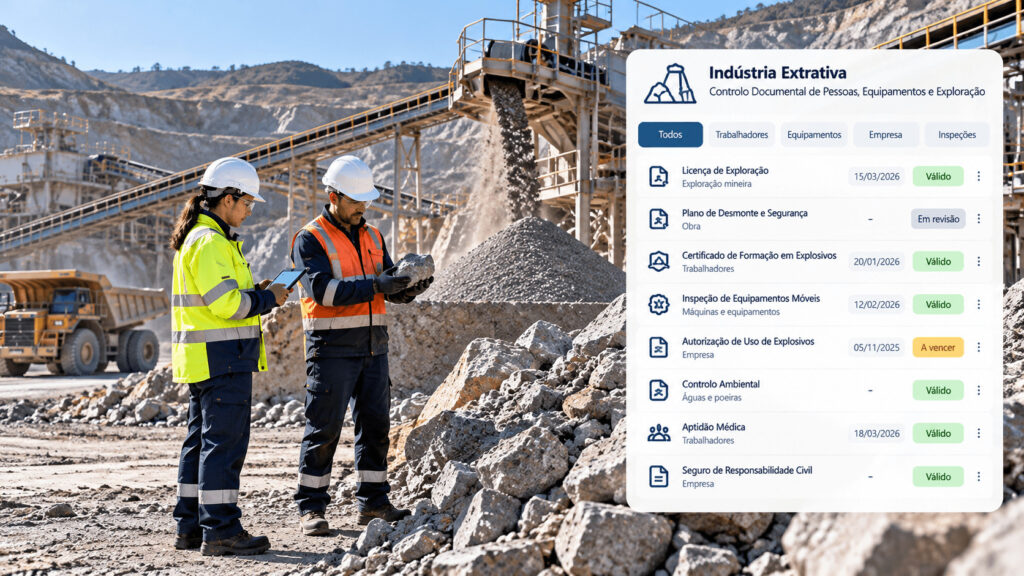
Contractor approval in construction is a crucial process that involves assessing and validating suppliers and subcontractors, to make sure they meet the organisation’s technical, legal and quality requirements. Document management platforms have become essential tools for optimising this process. They make it easier to organise, store and retrieve documents and ensure centralised, efficient control of contractor information.
By using a document management platform, construction companies can improve the accuracy and consistency of their supplier assessments and reduce the risk of errors and omissions. In addition, these platforms provide faster and easier access to critical information, which speeds up the approval process and ensures that decisions are based on up-to-date, reliable data. Another important benefit is the ability to monitor and update supplier documentation continuously, so that all information remains compliant with regulations and industry standards.
In this way, document management platforms improve the efficiency and transparency of the approval process in the construction sector. They also help to mitigate risks and strengthen relationships with contractors, which leads to more robust and effective management.
Centralising approval documents in construction
Document management platforms make it possible to centralise all documents related to contractor approval in construction. These include, for example, contracts, certifications, compliance records and performance reports. Having all these documents in one place gives every stakeholder quick and efficient access, saves time and reduces the risk of errors and omissions.
Regulatory compliance and contractor approval in construction
Regulatory compliance is a vital aspect of the construction industry. For this reason, document management platforms help to keep all the necessary documents up to date and easy to access, which makes it easier to meet legal and regulatory requirements. In addition, these platforms can be configured to send alerts about document renewal deadlines and expiry dates, which helps to avoid fines and work stoppages.
Greater operational efficiency
Digital document management significantly improves operational efficiency. For example, by automating the storage, search and retrieval of documents, construction companies can reduce the time spent on administrative tasks and focus on their core activities. Digitisation also makes collaboration between teams easier, with real-time document sharing and simultaneous file editing. This capability is particularly important in construction projects, where coordination between different departments is crucial.
Cost reduction
Implementing a document management platform can lead to significant savings. Using less paper, needing less physical storage space and improving operational efficiency all help to reduce overall costs. Furthermore, minimising the errors and corrections that are common in manual processes can generate additional savings by avoiding unnecessary expenses.
Data security and protection
Data security is a growing concern in every industry, and construction is no exception. Document management platforms offer advanced levels of security, including data encryption, access controls and usage audits. These measures protect sensitive information against unauthorised access and data loss and keep critical documents safe. In the event of a disaster, such as a fire or flood, digital documents can be recovered quickly, unlike paper documents, which may be destroyed.
Integration with other tools and systems
Integrating document management platforms with other tools and systems used in construction, such as project management software and BIM (Building Information Modelling), can provide a comprehensive and consistent view of every aspect of the project. This integration therefore supports informed decision-making, improves coordination between teams and keeps all information synchronised and up to date.
Transparency and auditing
Transparency is essential in construction projects, especially in large projects with multiple stakeholders. Document management platforms provide full traceability of every document, recording who accessed, changed or approved each document and when. This audit capability is vital for resolving disputes, ensuring compliance and providing a clear view of project progress.
Easy updates and revisions
In the construction sector, projects are subject to frequent changes and revisions. For this reason, document management platforms make version management easier and allow everyone involved to access the latest version of each document and consult its change history. As a result, confusion is avoided and everyone works with the most up-to-date information.
Contractor performance and approval in construction
Besides storing documents, document management platforms can also be used to monitor and assess contractor performance. This monitoring includes tracking deadlines, quality of work and compliance with contract requirements. Analysing performance data helps to identify areas for improvement and to make informed decisions about keeping or replacing contractors.
Better communication and collaboration
Effective communication is crucial to the success of any construction project. Document management platforms make communication between all stakeholders easier, because everyone accesses the same information and can collaborate efficiently. This reduces the likelihood of misunderstandings and conflicts and, consequently, contributes to the successful completion of projects.
The legal framework for contractor approval in construction
In construction, several pieces of legislation make checking contractor documents a practical necessity. First, Law no. 41/2015 requires construction companies to hold a licence or certificate issued by IMPIC that is suited to the type and value of the works. Second, Law no. 98/2009 requires employers to transfer liability for workplace accidents to an insurer. In addition, Decree-Law no. 273/2003 gives the executing contractor duties of control over subcontractors and self-employed workers on site. Finally, the Labour Code provides, in certain situations, for the joint and several liability of the hiring company for the subcontractor’s infringements.
Practical example: A formwork subcontractor
Consider a construction company that hires a formwork subcontractor for a housing project. Before starting on site, the subcontractor is given access to the platform and uploads its licence, certificates of no outstanding debts, workplace accident insurance policy and the list of workers with medical fitness and training. Next, the platform checks the expiry dates and the safety officer reviews the insurance policy. Only after approval are the workers authorised to enter. During the works, the platform then sends a warning whenever a document is about to expire.
Checklist for contractor approval in construction
- Licence or certificate suited to the contracted works.
- Certificates of no outstanding debts to Social Security and the Tax Authority.
- Valid workplace accident and civil liability insurance policies.
- Workers with proven medical fitness and training.
- Performance assessment recorded at the end of each project.
Common mistakes to avoid
A common mistake is to approve the contractor and forget about the workers, who also need valid documentation. Another mistake is to accept insurance policies without checking whether they cover every worker on site. Finally, many companies do not assess performance at the end of the works and, as a result, lose useful information for future hiring.
Frequently asked questions
What licence should a subcontractor hold?
It should hold an IMPIC licence or certificate with the qualifications and class suited to the type and value of the works it will carry out.
Conclusion: Benefits for contractor approval in construction
Implementing document management platforms brings clear benefits to contractor approval in the construction sector. Centralised and easy access to documents, greater regulatory compliance, operational efficiency, lower costs, data security and protection, integration with other systems, transparency, auditing and easy updates: these platforms play a crucial role in optimising approval processes.
For construction companies, where documentation is extensive and regulatory requirements are strict, these approval practices become even more vital. Effective document management not only improves efficiency and information security but also prepares the company to adapt and grow, so it can face the challenges of the sector with confidence and agility. By adopting these strategies, construction companies can minimise risks, optimise their processes and maximise the benefits of digitisation.
Read also: Document requirements in contractor approval and Implementing a document management platform in the contractor approval process.
To find out about legal occupational health and safety obligations, consult the Portuguese Working Conditions Authority (ACT).