
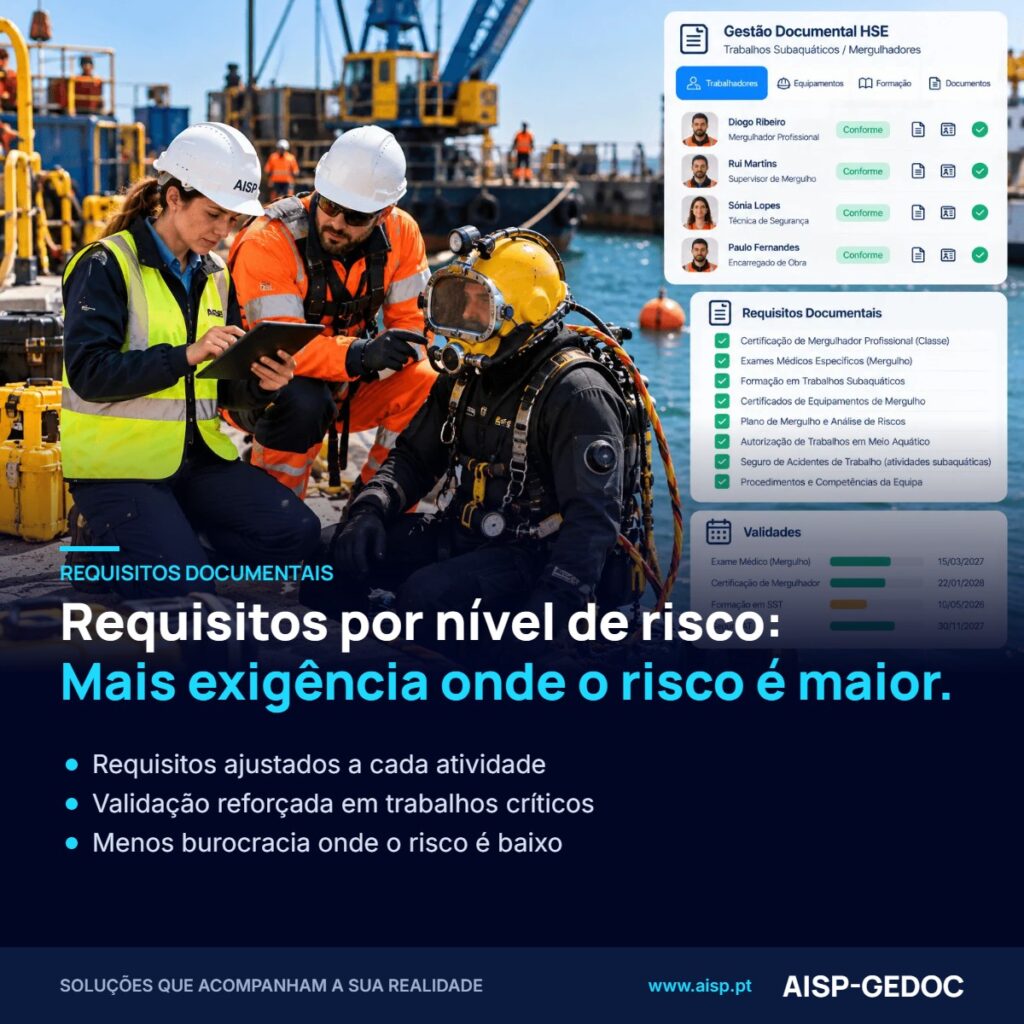
Risk-based requirements: Ask for more documentation where risk is higher
Asking all contractors for the same documents seems simple. In practice, however, it creates red tape where risk is low and leaves gaps where risk is high. That is why defining risk-based document requirements makes all the difference.
In addition, a risk-based approach matches the documents to the nature of each activity. For example, a technical visit, electrical work or work at height should not require the same level of evidence.
How to apply risk-based document requirements
To apply this model, therefore, your team should:
- Classify activities by risk level, using criteria shared by HSE, Procurement and Operations;
- Define a base set of documents common to all contractors;
- Add specific requirements for critical activities, such as training, fitness for work or equipment certificates;
- Review the classification whenever processes, workplaces or the law change.
In this way, the process becomes fairer for contractors and faster for simple activities. At the same time, it becomes more rigorous where safety demands it.
In practice, a configurable platform applies risk-based document requirements automatically. First, it identifies the activity. Then, it requests only the right documents. Finally, it blocks access for anyone who does not comply.
AISP-GEDOC helps companies define requirement matrices and configure them in document management platforms.
This approach also improves the relationship with contractors. When a company sees that it is asked only for the documents it needs, it responds faster and with better quality. As a result, rejections fall and the HSE team focuses its review on the activities that really involve risk.
Finally, the risk matrix makes the rules transparent for everyone involved.
Further reading: Contractor and subcontractor management: A complete guide.
Read also: document requirements management.
Contact us and match your requirements to the real risk of each activity.