
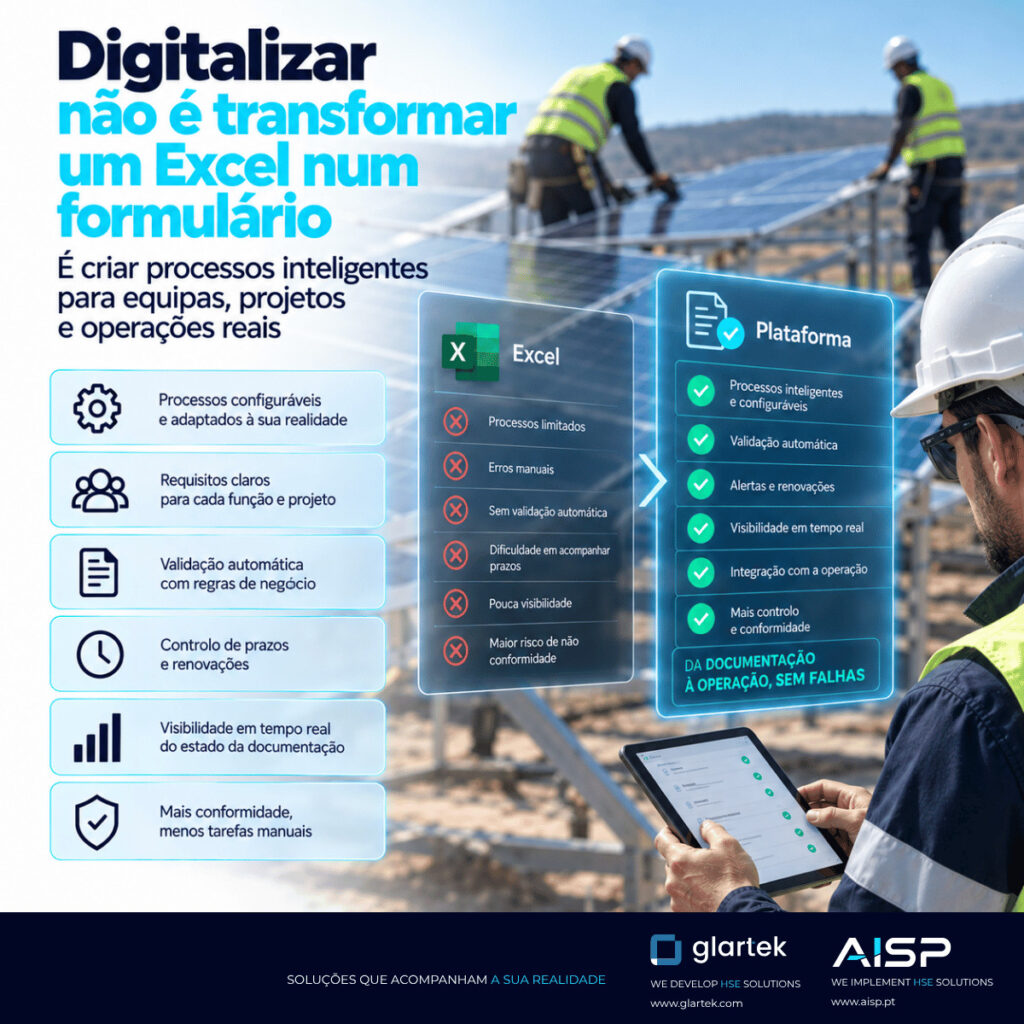
Taking an Excel spreadsheet, moving its columns into an online form and calling it digital transformation is, however, a common mistake. Above all, it is a costly one, and it is not what smart document processes look like.
The form collects the same data, with the same flaws: nobody validates the content, deadlines are still tracked from memory and the information remains stuck somewhere nobody sees it in time. The screen changes; the risk, however, stays the same.
What smart document processes change in practice
That is why real digitalisation means creating smart processes for real teams, projects and operations:
- Configurable processes: adapted to the way your operation works.
- Clear requirements by role and project: so everyone knows exactly what they need to submit.
- Automatic validation with business rules: the document is checked against the requirement, not just filed.
- Control of deadlines and renewals: alerts before expiry, not after.
- Real-time visibility: the documentation status available to decision-makers.
- More compliance, fewer manual tasks: the team finally stops chasing documents.
After all, the difference lies in the logic behind the form. On the Glartek platform, each submitted document is linked to a requirement, a person, a role and a project. This link is what makes it possible to validate, alert and decide, things a spreadsheet will never do on its own.
From documentation to operations, without gaps.
Show us the Excel sheet that supports your process today and, in a demo, we will work out with you how it would look as a controlled process.
Further reading: Contractor and subcontractor management: A complete guide.
Read also: Digitalising an old process does not mean transforming it and Why Excel still survives in processes that should already be digital. Finally, learn more about document automation.